

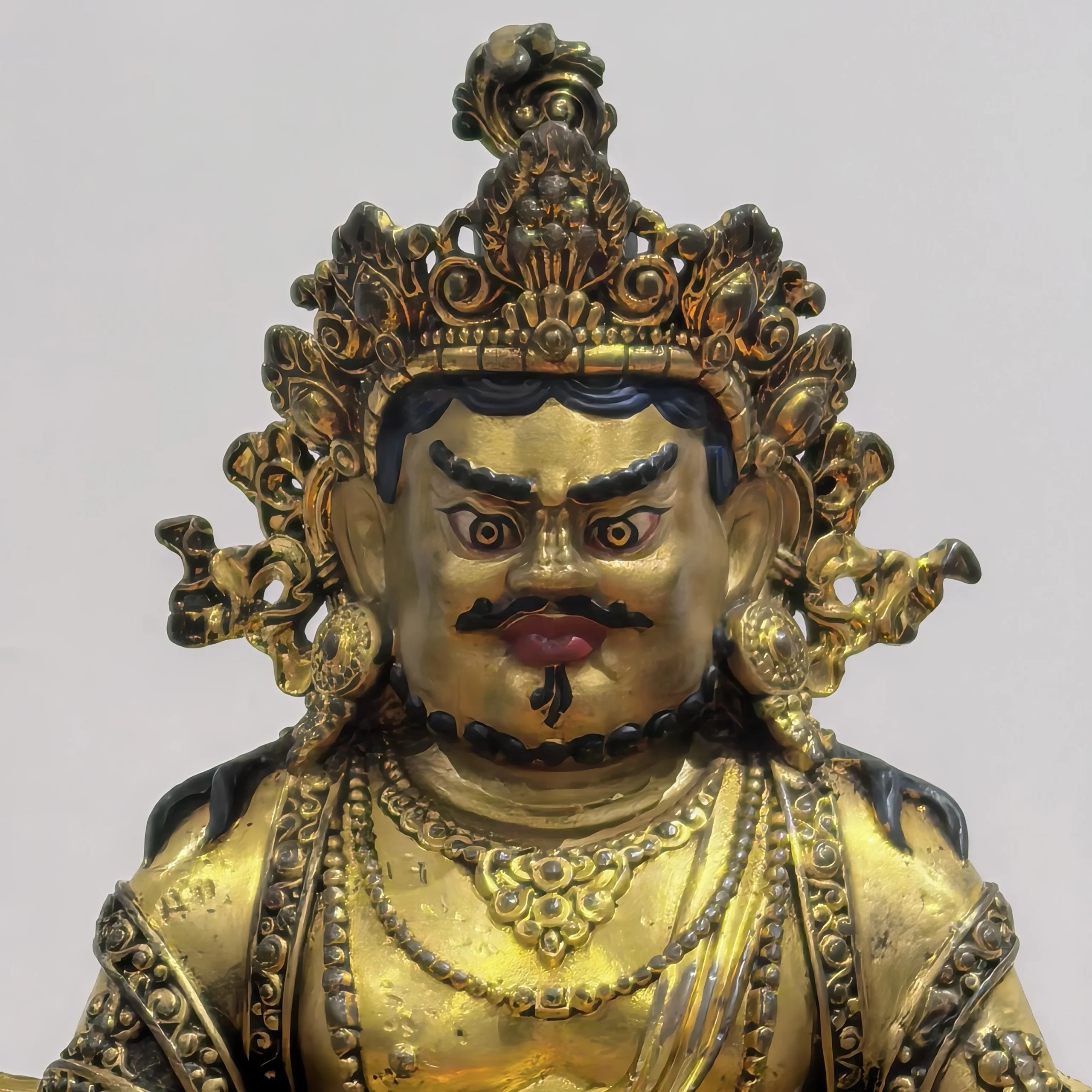
Fortune and Wisdom, Gathering Treasures, God of Wealth
Click the right float to log in and view price
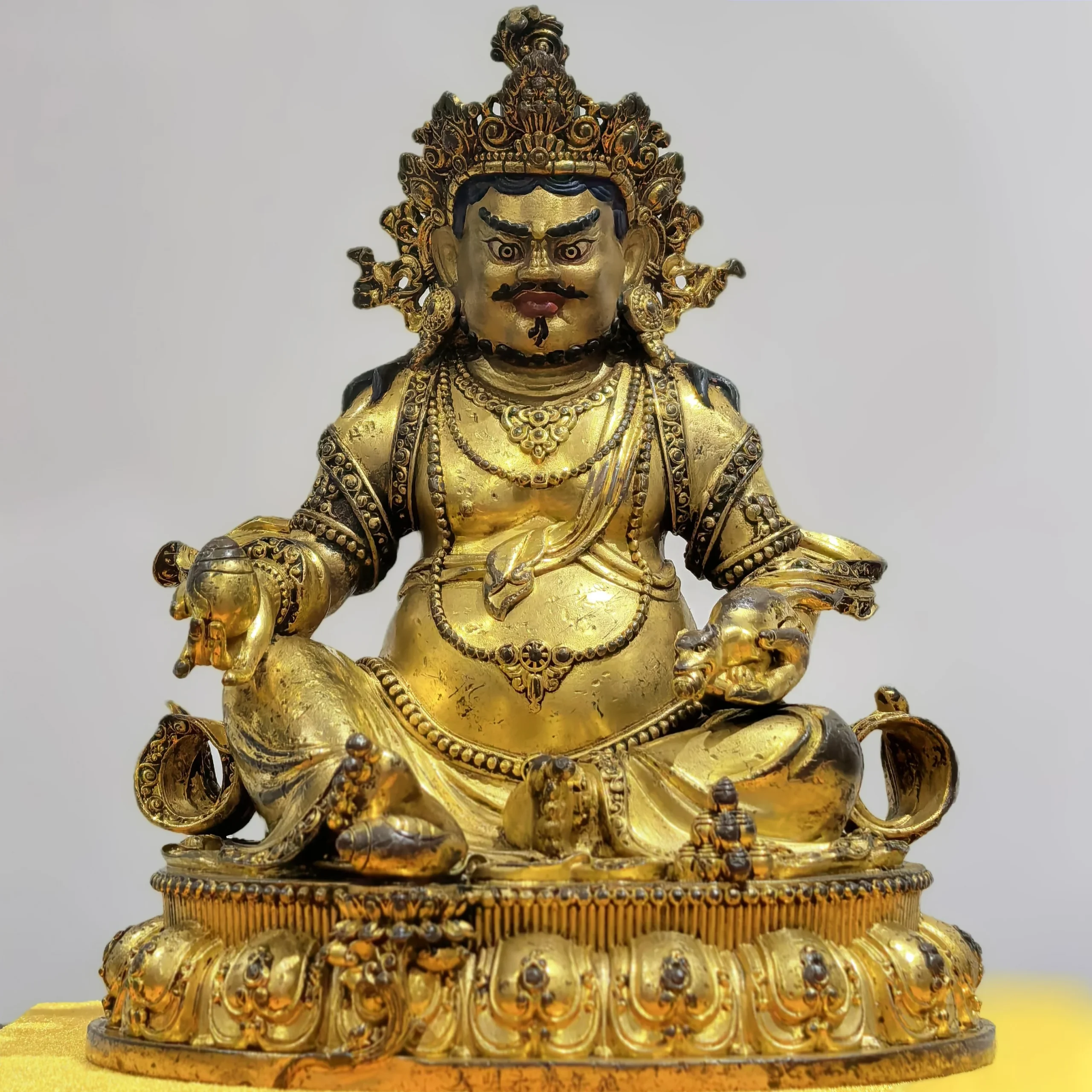
The Yellow God of Wealth is the first of the five surnamed gods of wealth in Tibetan Buddhism. The statue is full in shape, wearing a five leaf crown on its head, holding a Mani pearl in its right hand, a spitting weasel in its left hand, and stepping on a seashell with its right foot.
The bronze gilded statue is cast using the ancient lost wax method, with exquisite craftsmanship, symbolizing the recruitment of righteous wealth, protection of the cause, and the dual increase of fortune and wisdom. It has both worship and collection value.
Free shipping for new users when placing their first order!
- Satisfaction Guaranteed
- No Hassle Refunds
- Secure Payments
Description
Key Features
The Yellow God of Wealth is the foremost of the five surnamed gods of wealth in Tibetan Buddhism.
Golden body color: The entire body is golden, symbolizing the earth, harvest, and nobility.
Big belly and small body: Short and plump figure, showing a rich and plump appearance.
Holding Mani beads: illuminating all directions, adding blessings and wisdom.
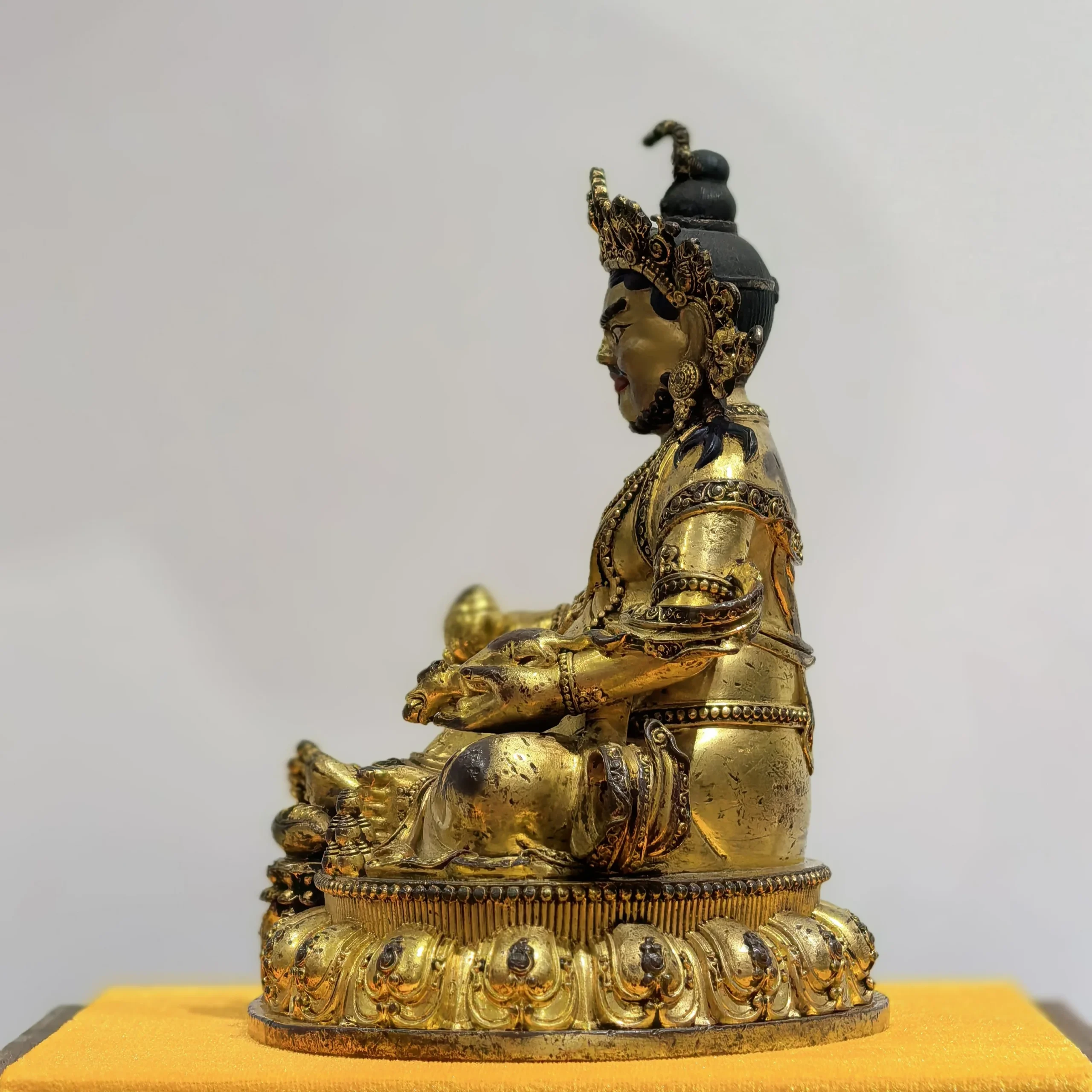
Holding the spitting treasure mouse: spitting treasure from the mouth of the mouse, symbolizing endless wealth.
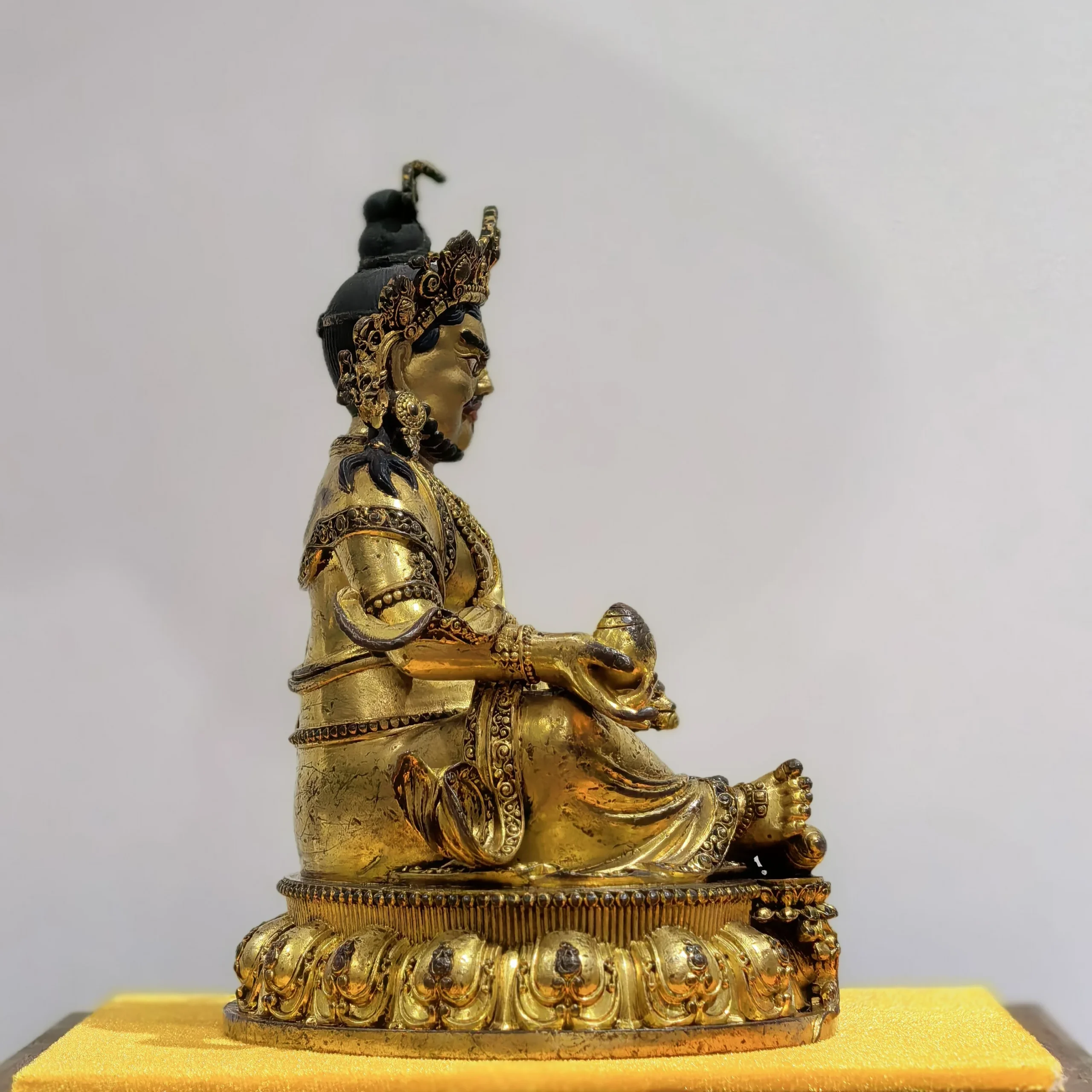
Stepping on white conch shells: symbolizing the ability to enter the sea to retrieve treasures and attract wealth from all over the world.
Solemn posture: wearing five Buddha crowns, draped in heavenly robes and ornaments, sitting on the lotus moon wheel.
Product Description
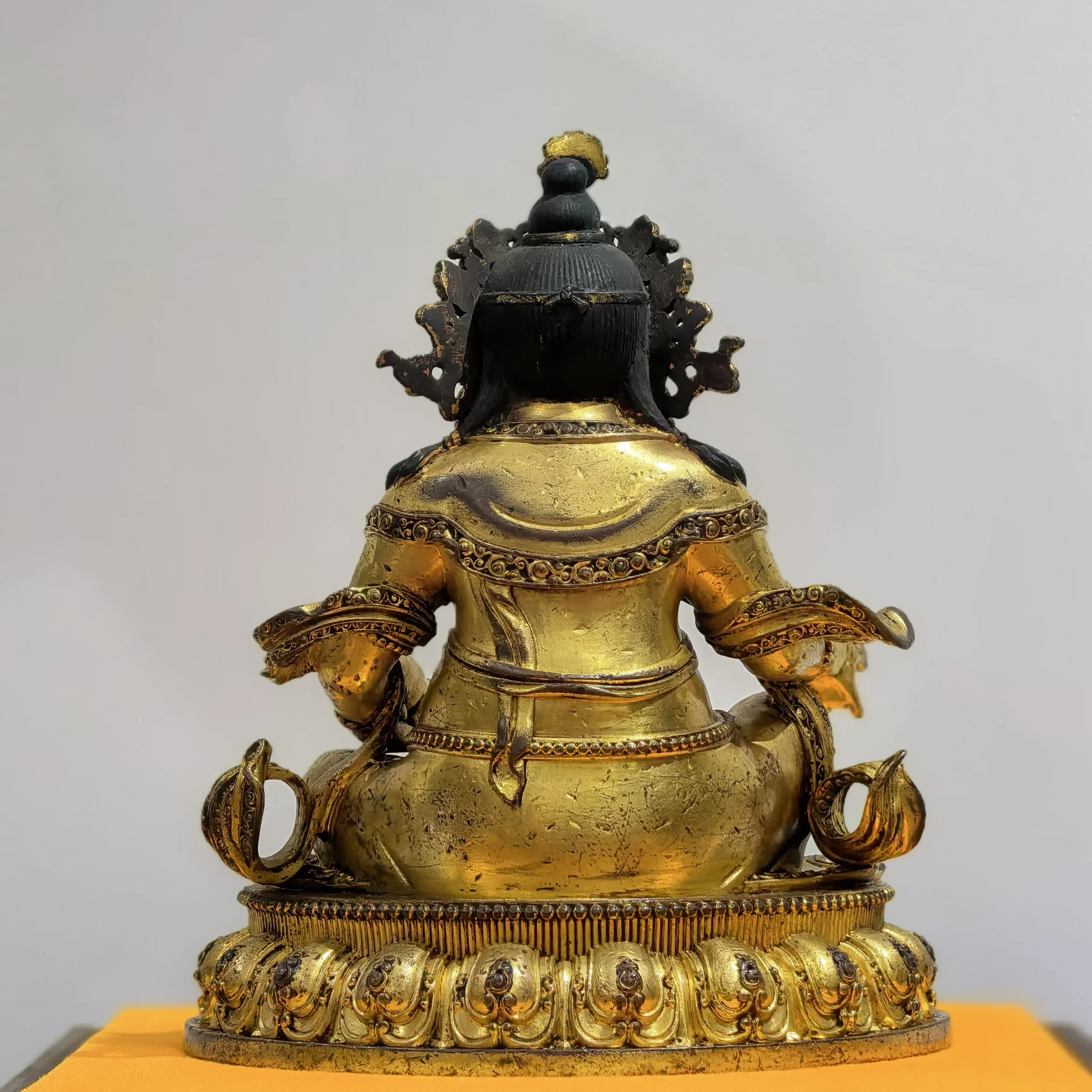
The Yellow God of Wealth is the foremost of the five surnames of wealth in Tibetan Buddhism. The statue is full and plump in shape, with a rounded figure, and sits on a double layered lotus platform in a standard game. Wearing a five leaf crown, with a round and compassionate face, and lively eyes; The upper body is exposed, and the chest is adorned with a heavenly robe adorned with delicate and smooth carvings. Holding the Mani Jewel in the right hand, holding the spitting weasel in the left hand, lightly stepping on the conch with the right foot, the statue has a standard ritual and dignified proportion, with auspicious meanings of attracting wealth and blessings, dispelling poverty and increasing wealth.
If it is made of copper gilding material: the copper body is thick and steady, cast using traditional lost wax method, with warm and thick gilding throughout the body, pure and introverted gold color, clear layers of clothing patterns, lotus petals, and accessories, fine and orderly craftsmanship, overall solemn and elegant, full of ancient charm.
collectible value
- The orthodox Tibetan Buddhist deity of wealth, with the meaning of attracting legitimate wealth, alleviating poverty, protecting the cause, and increasing both blessings and wisdom, is suitable for home worship, praying for blessings and blessings, and has a profound religious and cultural heritage.
- Copper gilded statue making combines traditional ancient methods such as casting copper, gilding, and chiseling. Its shape follows the rituals of Tibetan statue making, with beautiful lines and exquisite details. It is a classic representative of Buddhist statue art, with both ornamental and artistic value.
- Made of refined copper and plated with thick gold, this product has a solid and durable texture that is resistant to oxidation and deformation. As time goes by, the coating becomes warmer and more moist, possessing the attribute of long-lasting inheritance and passing down from generation to generation.
- The stock of Huang Caishen statues with orthodox craftsmanship, intact appearance, and proper etiquette is limited. They have three attributes: worship, art collection, and folk auspiciousness. They have high market recognition and strong stability in value preservation.
- It is a popular collection category in Buddhist statues that focuses on gathering positive energy and wealth, guarding homes and receiving blessings, assisting in the smooth progress of careers, and eliminating poverty and low income obstacles.
Craftsmanship
The bronze gilded golden statue of the God of Wealth is a classic combination of metal craftsmanship and religious art in Tibetan Buddhist sculpture. Its technological characteristics are mainly reflected in four aspects: material, casting, gilding, and decoration
- Material and body: Thick and pure, with a texture that feels comfortable to the touch
Choose copper or refined brass as the base material, with a pure and dense texture. The overall weight is heavy and the feel is solid, especially for the imperial statues of Yongle, Xuande in the Ming Dynasty, and Qianlong in the Qing Dynasty. The bronze body is particularly heavy, showing a steady and dignified demeanor.
- Casting process: Ancient precision casting, precise details
Traditionally, the “lost wax method (dewaxing method)” is used for casting, which can accurately replicate complex details, create smooth and clear lines, and have no obvious contour lines.
Strictly follow the Buddhist statue making ritual, with customized body proportions, ritual tools, and postures. The characteristics of the Yellow God of Wealth, short, chubby, round belly, and stepping on conch shells, must be accurately reproduced.
The body, backlight, and base are often cast separately and plugged in, making it easy to finely carve each component.
- Gilding process: The golden water is full and the precious light is inherent
Traditional gilding (fire plating method)
Gold making paste: Crush gold into thin sheets, cut it into pieces, mix it with mercury in proportion, and heat it to make gold amalgam (gold paste).
Gold coating: Apply evenly to the polished surface of the copper tire.
Roast yellow: Bake over charcoal to evaporate mercury and firmly attach gold.
Polishing: Use agate or jade knives to repeatedly polish the gold surface, making it shiny like a mirror.
Thick gold layer: Superior statues have full gold water, pure color, and a warm golden or reddish gold color.
Visible Mud Gold: More delicate mud gold craftsmanship is often applied to exposed skin areas such as the face, chest, and arms, resulting in a softer texture.
Historical patina: Due to the oxidation of time, antique genuine products will form a warm and mellow patina on the gold surface, with a hidden and precious luster.
- Carving and Decoration: Fine carving, rich and luxurious
Detail carving: The clothing patterns, pendants, lotus petals, and crowns are all meticulously carved by hand, with smooth lines and distinct layers.
Partial decoration
Inlaying technique: Top tier statues are often inlaid with turquoise, coral, lapis lazuli, etc. on the crown and chest, with gorgeous colors.
Two tone craftsmanship: Some statues use a combination of gilding, chiseling, and leaving red copper on the ground to create a sharp contrast between red copper and gold, creating a highly three-dimensional effect.
Condition Report
Only logged in customers who have purchased this product may leave a review.
Related products
-
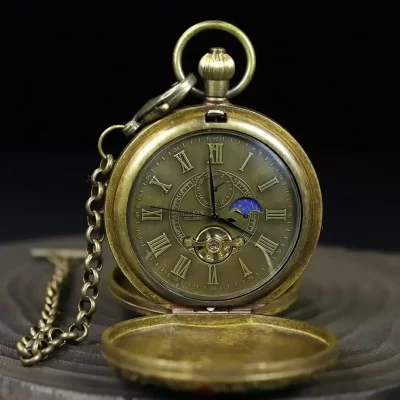
Double-Opening Copper Mechanical Pocket Watch
Click the right float to log in and view price -
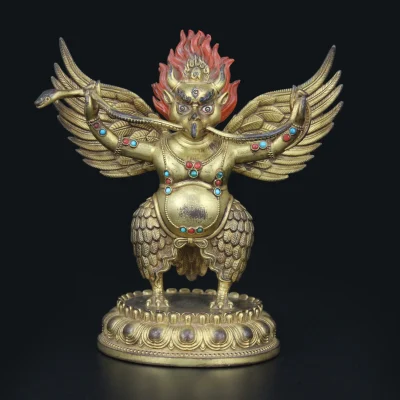
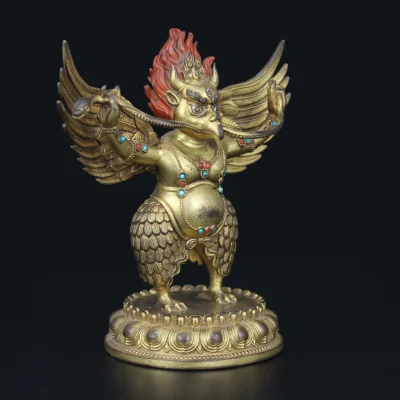
Gilded bronze Garuda statue inlaid with gemstones
Click the right float to log in and view price -

-
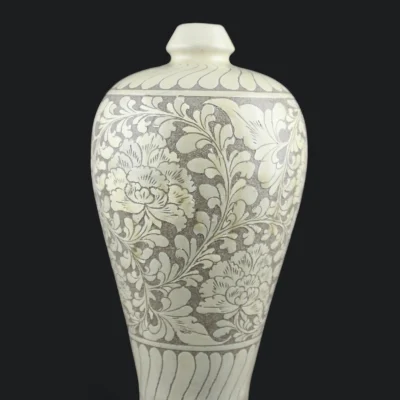
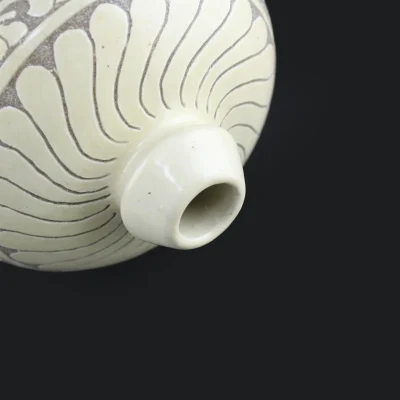
Cizhou Ware Black-Ground White Sgraffito Peony Plum Vase (Meiping)
Click the right float to log in and view price


&url=https://woooart.com/gallery/cizhou-ware-black-ground-white-sgraffito-peony-plum-vase-meiping/&media=https://woooart.com/wp-content/uploads/2026/01/mp1-683x1024.webp)
Reviews
There are no reviews yet.