
A Symbol of Harmony in Chinese Jade Tradition【和合之象中的玉文化雅韵】
Among the many motifs that recur throughout Chinese decorative arts, few carry emotional resonance as enduring as the mandarin duck. Revered for centuries as an emblem of conjugal harmony, mutual devotion, and lifelong partnership, the mandarin duck has occupied a privileged place in jade carving, painting, poetry, and literati culture. This Jade Mandarin Duck Handheld Ornament stands as a refined continuation of that tradition—uniting symbolic depth, material excellence, and tactile artistry in a compact, intimate form.
The Cultural Language of Mandarin Ducks
In Chinese cultural history, mandarin ducks are believed to form lifelong pairs, appearing together in both life and art. As early as the Tang and Song dynasties, they became a visual metaphor for marital fidelity and emotional unity. In poetry and decorative objects alike, paired mandarin ducks symbolized not merely romantic affection, but balance, shared direction, and quiet companionship—ideals central to Confucian family ethics.
Within jade carving, the motif gained particular prominence. Jade, long associated with moral virtue, integrity, and refinement, was seen as the ideal medium through which to express such values. When mandarin ducks are carved in jade, the symbolism becomes layered: emotional harmony is joined with moral harmony, and affection with endurance.
Material: Pale Celadon-White Jade
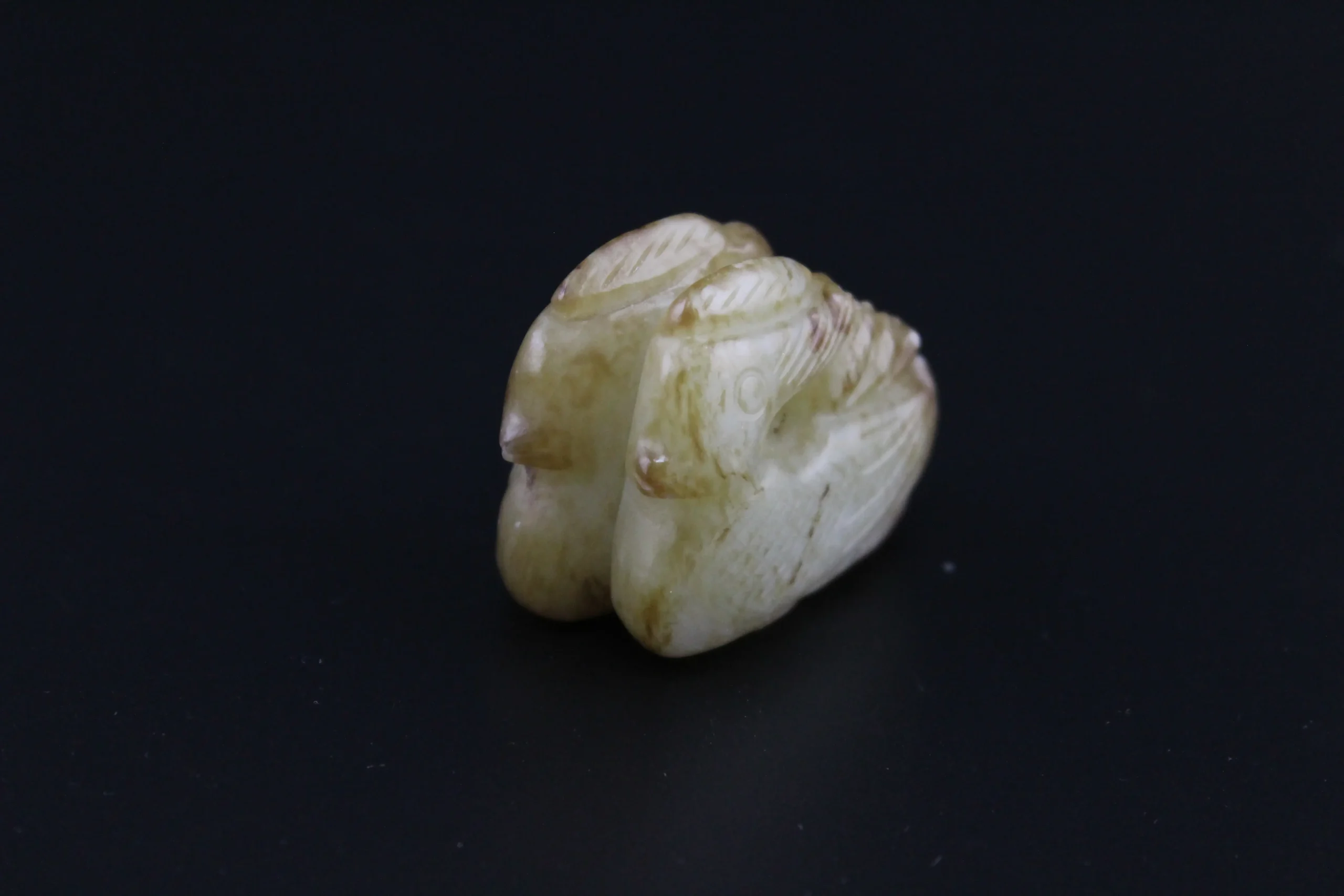
This ornament is carved from pale celadon-white jade, a material prized for its soft translucency and restrained elegance. Unlike highly saturated or visually dramatic stones, celadon-white jade appeals through subtlety. Its beauty lies in nuance—gentle tonal variation, a warm internal glow, and a surface that responds richly to touch.
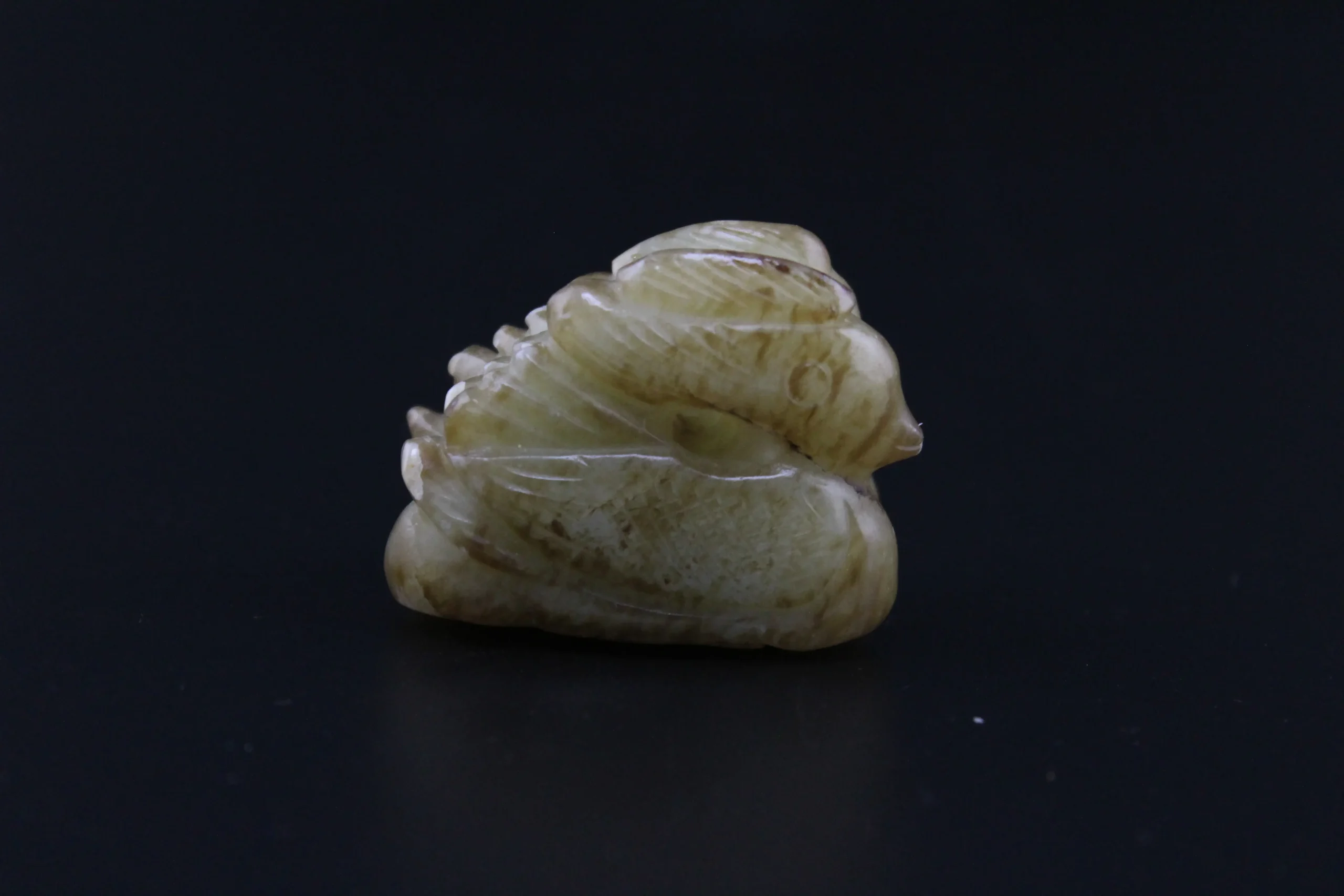
The jade displays natural surface variations and early signs of patination, suggesting prolonged handling or careful aging. Such characteristics are not considered flaws in traditional Chinese connoisseurship; rather, they are marks of authenticity and intimacy. Over time, continued handling allows jade to develop a deeper, silkier luster, creating a living relationship between object and owner.
Sculptural Composition and Form
The carving depicts a pair of mandarin ducks standing closely together, their bodies gently touching and oriented in the same direction. This shared posture is deliberate. Rather than dramatizing interaction, the sculptor emphasizes unity through stillness—two forms becoming one visual rhythm.
The composition is compact, balanced, and self-contained. There is no excess extension or theatrical gesture. Instead, the form conveys calm intimacy and mutual reliance, echoing traditional Chinese aesthetics that favor restraint over display, implication over explicit narrative.
This quiet composure makes the piece especially suitable as a handheld ornament. It invites contemplation rather than spectacle.
Carving Technique and Artistic Restraint
Technically, the ornament employs rounded sculptural modeling combined with shallow incised lines. The feathers and wings are suggested rather than exhaustively detailed, allowing light to flow smoothly across the surface. Knife work is confident yet understated, demonstrating control without ostentation.
This approach reflects a mature carving philosophy: prioritizing overall form, proportion, and expressive rhythm over decorative excess. Such restraint aligns with classical jade aesthetics, where the highest skill is often invisible, revealed only through balance, comfort, and lasting appeal.
Tactile Experience and Handheld Tradition
Handheld jade objects occupy a special place in Chinese material culture. Unlike purely visual artworks, they are meant to be touched, warmed, and slowly transformed through use. The base and reverse of this piece are smoothly finished, fitting naturally in the palm.
With regular handling, body warmth and natural oils will gradually deepen the jade’s luster, creating a personal patina unique to its owner. In this way, the ornament becomes not merely an object of observation, but one of companionship—quietly evolving over time.
Collectibility and Contemporary Appeal
As a collectible, this jade mandarin duck ornament bridges multiple categories:
- Symbolic Object: Conveying auspicious meanings of harmony and enduring affection
- Artisanal Work: Demonstrating traditional jade carving principles
- Functional Artwork: Designed for tactile engagement
- Decorative Accent: Suitable for desk, scholar’s studio, or personal display
It appeals equally to jade collectors, admirers of Chinese art, and those seeking a meaningful object to commemorate partnership, marriage, or personal values of balance and loyalty.
Conclusion
The Jade Mandarin Duck Handheld Ornament is not defined by extravagance, but by refinement. Its power lies in subtle form, symbolic clarity, and the quiet dialogue between hand and stone. Rooted in centuries of cultural meaning and executed with disciplined craftsmanship, it stands as a graceful testament to the enduring beauty of Chinese jade artistry.
Whether held in the hand, displayed in a personal space, or treasured as a symbolic keepsake, this piece offers more than visual pleasure—it offers continuity, intimacy, and a tangible connection to tradition.
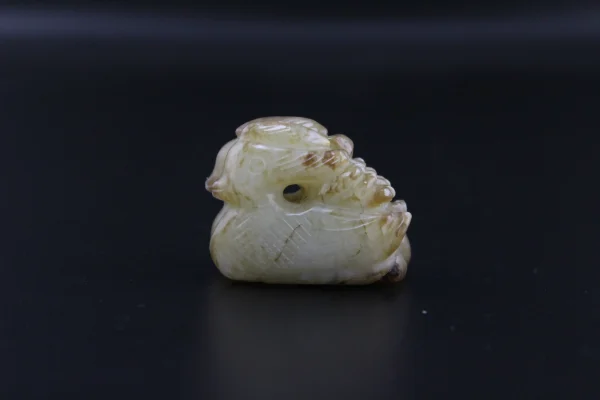
Jade mandarin duck handheld carving symbolizing harmony, partnership, and enduring affection. Finely carved with a smooth, warm jade texture, ideal for both appreciation and handling.
玉雕鸳鸯手把件,造型成双相依,寓意夫妻和合、情意绵长。玉质温润,雕工朴雅,兼具把玩与收藏价值。
在中国传统艺术题材中,鸳鸯是一种极具情感温度与文化深度的意象。自唐宋以来,鸳鸯常被视为夫妻和合、情意专一、相伴终生的象征,频繁出现于诗词、绘画、玉雕及文房器物之中。当这一寓意被寄托于玉石之上,其文化内涵便更显厚重而隽永。
这件玉雕鸳鸯手把件,正是传统吉祥意象与玉文化精神相结合的典型之作,兼具观赏性、把玩性与收藏价值。
鸳鸯意象的文化渊源
鸳鸯成双成对、雌雄相随的自然习性,使其在中国文化中被赋予“情感专一”“夫妻同心”的象征意义。在传统伦理与家庭观念中,稳定、和合与共同进退被视为理想状态,而鸳鸯正是这一理想的具象化表达。
在玉雕艺术中,鸳鸯题材尤为常见,既可用于婚庆吉礼,也常作为随身佩物或案头雅玩,寓意守情守义、和顺长久。与玉石所承载的“温润、坚韧、内敛”之德相结合,形成了极具东方审美特色的精神象征。
玉质与材性:青白玉的温润之美
本件选用青白玉为材,玉色柔和清雅,光泽内敛而含蓄。不同于艳丽张扬的玉料,青白玉更强调“润而不浮、静而不冷”的气质,正契合鸳鸯题材所表达的情感状态。
器物表面可见自然沁色与细微使用痕迹,显示出玉质在长期把玩过程中所形成的温和包浆。这种随时间渐生的变化,正是传统玉器鉴赏中极为看重的特征——玉不求新亮,而贵在“养”。
造型构思与艺术表现
整体造型以一对鸳鸯相依而立为主题,双鸟并首同向,身体紧密相贴,却无夸张姿态。造型紧凑而稳定,比例匀称,视觉重心集中,呈现出安静而含蓄的情感张力。
这种构图方式并不追求动态叙事,而是通过静态形态传达关系本身的恒久与笃定,体现出中国传统艺术中“以静写情”的审美取向。
雕刻技法与审美取向
本件采用圆雕结合浅线刻的传统技法。鸳鸯羽翅以简练线条勾勒,起伏转折自然流畅,刀法稳健而不张扬。雕刻者刻意避免繁复纹饰,将重点放在整体体量、线条节奏与气韵表达之上。
这种克制而成熟的处理方式,正是高水平玉雕作品的重要特征——技巧隐藏于形制之中,耐看、耐品、耐久。
把玩属性与使用体验
作为一件手把件,其底部与背部处理平滑,贴合手掌曲线,握持舒适。长期把玩不仅能够进一步滋养玉质,也使器物逐渐形成专属于使用者的光泽与触感。
在传统文人生活中,把玩玉器不仅是审美行为,更是一种静心养性的过程。玉在手中,人与物之间建立起一种缓慢而持久的联系。
收藏与陈设价值
从收藏角度看,这件玉雕鸳鸯手把件具备多重价值属性:
- 吉祥寓意明确:象征夫妻和合、情感专一、相伴长久
- 玉质温润耐养:适合长期把玩与传承
- 造型含蓄典雅:符合传统审美,耐看不俗
- 用途灵活:可随身把玩,亦可作为案头陈设
无论作为个人雅藏,还是寓意深远的赠礼之选,皆相宜得体。
结语
这件玉雕鸳鸯手把件并不以张扬取胜,而以含蓄见长。它将情感寓意、玉石品性与雕刻美学融为一体,在静谧之中传递恒久的文化价值。
当玉在手,温润渐生;当意在心,和合自成。它不仅是一件器物,更是一种关于陪伴、守护与时间的东方表达。